
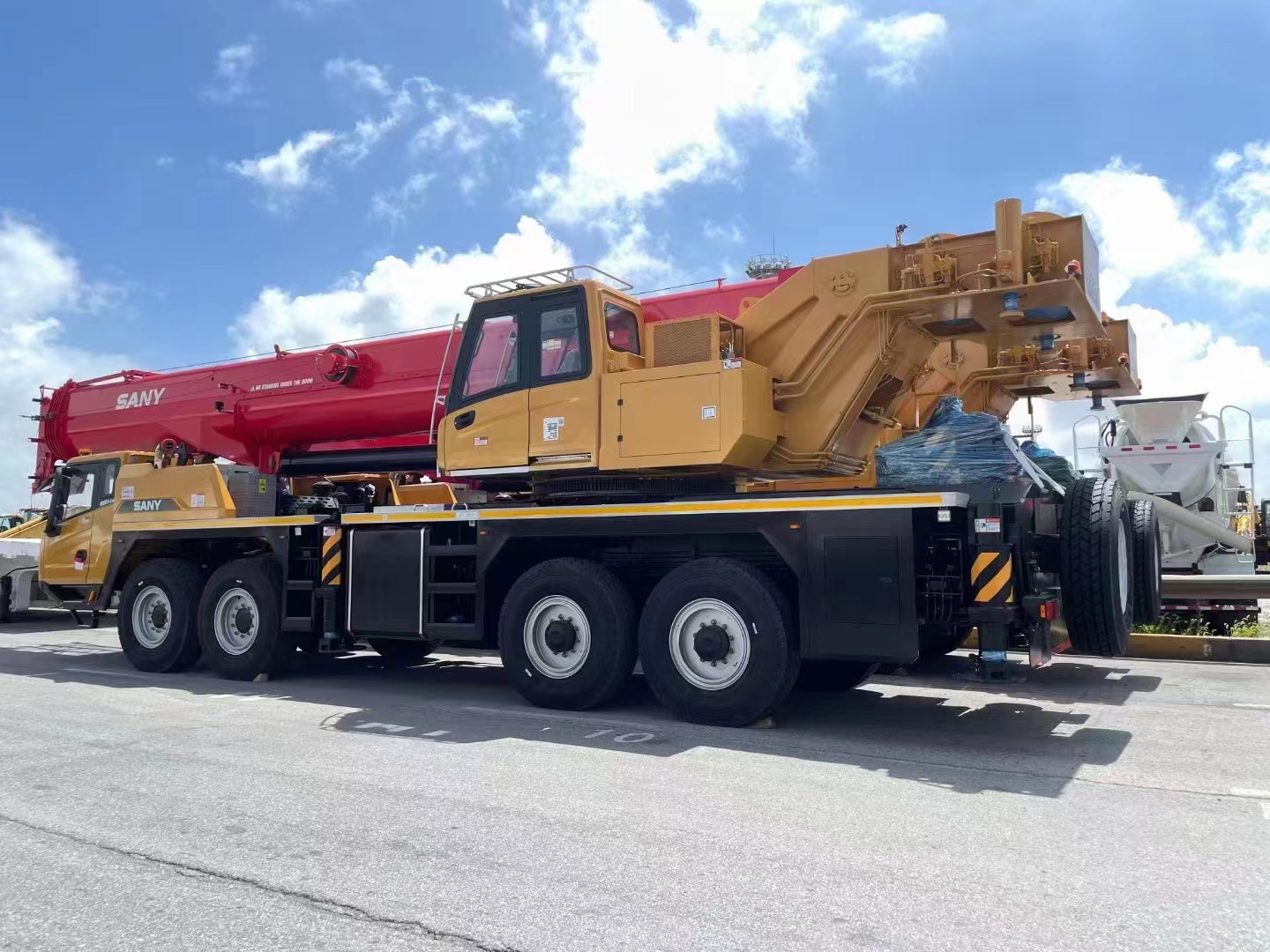
As the application scope of XCMG SANY and ZOOMLION truck cranes becomes wider and their usage frequency increases, the acceptance inspection and regular inspection of these cranes should also be more comprehensive.
For truck cranes that operate on-site for a long time, in addition to the acceptance inspection, the regular inspection should also be implemented.
The precautions for the acceptance inspection and regular inspection of truck cranes are as follows:
- Model verification: For the acceptance inspection of truck cranes, the first step is to check whether the model is consistent with the reported materials. This is to prevent the occurrence of “small replacing large” situations. For equipment that “replaces small with large”, the model on the nameplate may also be tampered with. To distinguish them, the acceptance personnel need to have certain experience and consult the equipment materials to find out if there are any inconsistencies.
- Safety device inspection:
1) Inspection of maintenance switches (emergency switches)
Due to the working characteristics of truck cranes, each truck crane will be equipped with a maintenance switch. If the equipment malfunctions or the safety device alarms, opening the maintenance switch allows the equipment to operate normally. This leads to some drivers with poor safety awareness often ignoring the faults and safety alarms and continuing the lifting operation by turning on the maintenance switch. It is necessary to strictly prevent operating the equipment while turning on the maintenance switch. In addition, the daily pre-shift inspection should be implemented to promptly detect equipment faults and solve them or stop the equipment from being used.
2) Lifting height limit test
During the acceptance inspection, daily pre-shift inspection, and regular inspection, the lifting height limit device should be tested to ensure its normal operation. During the test, the maintenance switch should always be in the normal operation position. When the lifting height limit device operates, an alarm signal can be seen on the driver’s console display, and some equipment may also have an audible alarm. Timely detect the failure of the lifting height limit device, and if there is a problem, it should be rectified before reusing the equipment.
3) Level gauge inspection
The operation of truck cranes should ensure that the chassis remains level. The levelness of the chassis is determined by the level gauge.
4) Three-circle (over-reach) protection inspection
Truck cranes are equipped with three-circle protectors when leaving the factory to ensure that the steel wire rope on the drum does not exceed three circles when the wire rope is not wound, preventing the wire rope from slipping or reversing on the drum. During each inspection, the effectiveness of the three-circle protection should be tested.
5) Hook anti-detachment device inspection
The hook anti-detachment device prevents the load from falling off during lifting operations. It is necessary to check whether it is intact and functioning effectively.
6) Rotation locking device inspection - Inspection of connecting parts, steel wire ropes, and steel wire rope end fixation:
1) Inspection of connecting parts:
Check if the bolts at the connection position are loose and if the axial retarding device of the pin shaft is standard. Prevent the use of iron wire instead of the locking pins of the fixed shafts of the hook anti-detachment device. Each truck crane should be equipped with a toolbox, which should contain common maintenance tools (including wrenches, pliers, etc.) and spare parts for vulnerable components (including locking pins, bolts, etc.). In case of minor issues such as loose bolts, timely rectification can be carried out. 2) Inspection of steel wire ropes Regularly inspect the usage of steel wire ropes to promptly detect the compression and wear of the steel wire ropes. 3) Inspection of rope end fixation of steel wire ropes The rope end fixation of truck cranes mostly adopts the method of wedge sleeve and rope clamp (cage). The inspectors need to be familiar with the requirements of these two fixation methods
The above are the matters that should be noted during the acceptance and regular inspection of truck cranes, as well as the photos of common problems of truck cranes. The safety education for drivers and the improvement of project management systems should be implemented. When encountering faults and problems of truck cranes, the drivers should report them immediately. The managers who receive the reports can promptly arrange professionals to rectify the problems, and then put them back into use. Thus, many safety hazards that may occur during lifting operations can be eliminated.